
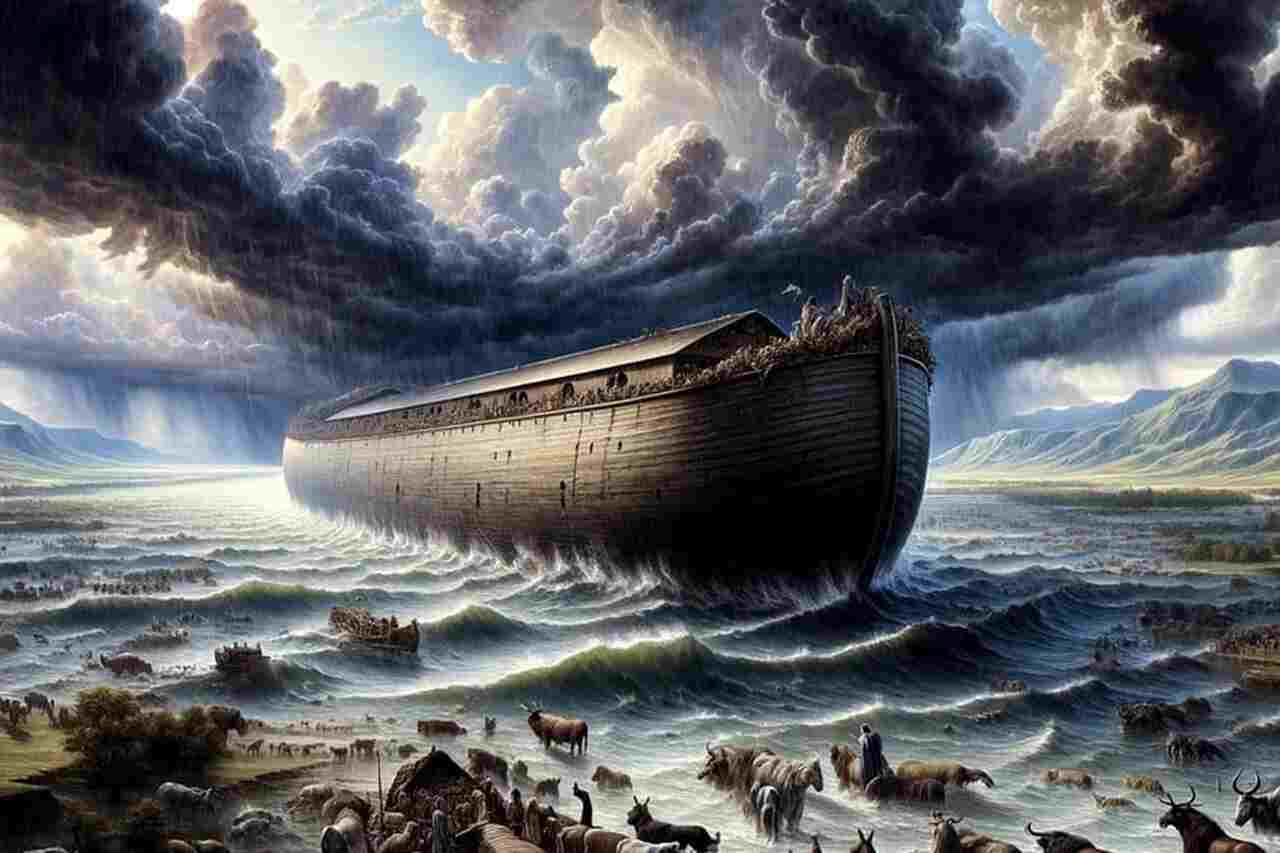
American scientists discovered the location of the supposed Noah’s Ark after intensive research involving innovative radar technology.
Noah’s Ark appears in the Bible as the gigantic boat used by Noah to save his family and various species of animals during the Great Flood.
While the boat itself was probably destroyed over the millennia, no one knew for sure where the Ark was located. Until now.
Using innovative radar technology, independent researcher Andrew Jones and his team discovered that the supposed Noah’s Ark is at the Durupinar geological site in eastern Turkey, a few kilometers south of Mount Ararat.
“It is exactly what you would expect to find if this were a man-made boat, consistent with the biblical specifications of Noah’s Ark,” Jones told Christian Broadcasting Network.
Jones and his team worked with Noah’s Ark Scans, an “independent organization” of people “interested in conducting scientific work” at the Ark’s site, according to him.
The site not only looks like a hill shaped like a boat, but it also measures 162 meters long. That is the same dimension as the Ark built about 4,300 years ago, The New York Post reported.
The radar appeared to detect a 4-meter “tunnel” running through the center of the structure, added the Daily Mail, as well as underground layers and “central and side corridors.”
According to the team, this information corroborates Genesis 6:16, which revealed that Noah was instructed to build “a lower deck, a second and a third.”

But that’s not all. “We noticed that the grass growing inside the boat-shaped formation has a different color compared to the area around it,” Jones said.
After testing, they discovered it had lower pH levels than the soil just beyond the formation, which, according to them, is “compatible with rotting wood.”
“If you know soil science — since I am a soil scientist — you’ll understand that potassium levels, organic matter, and pH can be influenced by the decomposition of organic material,” explained William Crabtree, another member of Noah’s Ark Scans.
“If it were a wooden boat and the wood had rotted over time, we would expect to see elevated potassium levels, changes in pH, and higher organic content — and that is exactly what we are finding.”
Now, the team explained they want to conduct core drilling research to “give us a much clearer picture of whether this is really something made by humans,” Jones said.

Photo and video: Noah’s Ark Scans. This content was created with the help of AI and reviewed by the editorial team.
